 0
0
 0
0
Your basket is empty...
Analytical detection of hazardous chemicals in enviromental water samples is challenging due to complex mixtures and trace concentrations of contaminants. This application shows an accurate GC-MS method for indentification and control of volatile and semi-volatile organic pollutants in drinking water, surface water and wastewater.
Polycyclic aromatic hydrocarbons (PAHs) are a group of chemicals formed during the incomplete burning of coal, oil, gas, wood, garbage, and tobacco. They are widespread environmental pollutants found in air, soil and water. Many PAHs are highly toxic and have been determined as carcinogenic and mutagenic.
The application note shows very nice separation of 19 polycyclic aromatic hydrocarbons listed in the EPA methods 610 and 8100. Compared to some other GC methods, this separation uses temperature gradient up to 310 °C.
1607 kBSemi-volatile organic compounds (SVOCs) are monitored globally in the environment due to their prevalence and the risks they pose to human health. GC-MS is a common approach to analyzing semi-volatile compounds using methods that involve analyzing extracts from many types of environmental matrices, including solid waste, soil, air sampling media, and water samples.
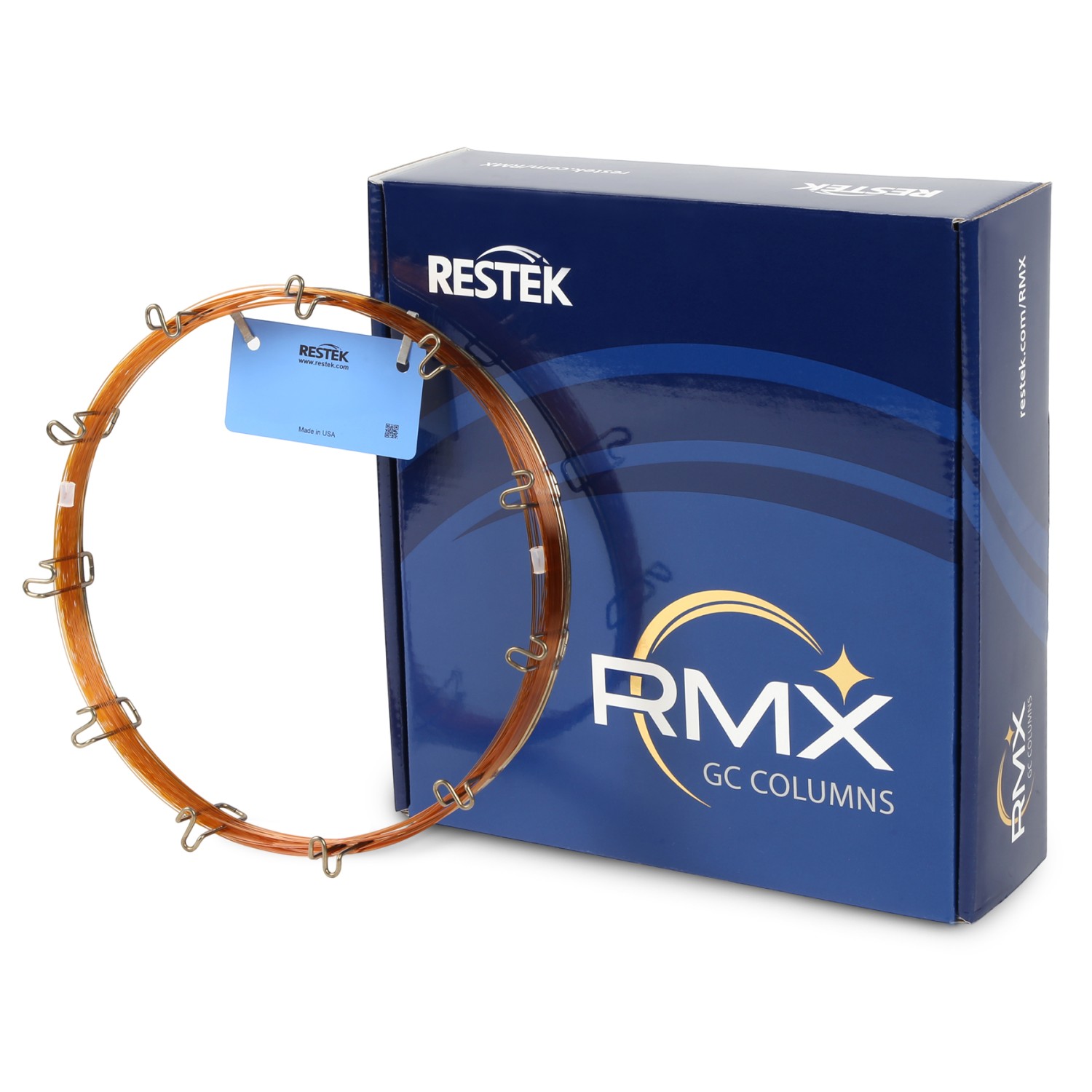
The premium RMX-5Sil MS column, manufactured with new TriMax deactivation technology, provides a significantly more inert surface necessary to achieve symmetrical peaks for active compounds, acidic and basic analytes.
Total petroleum hydrocarbons index (TPH) is a typical environmental analysis. It has replaced the infrared spectroscopy method using problematic solvents, i.e. Freons. This gas chromatography analysis (GC) monitors hydrocarbons between n-decane and n-tetracontane. These two hydrocarbons are used as the range marker and injection efficiency control. Aditionally, the GC method has an important advantage – this can show a type of hadrocarbon contamination (e.g. gasoline, naphtha, motor oil) and weathering status (some n-alkanes disappear during their stay in the enviroment).
2085 kB